
faqs » answer


1/8/2003
   What are the factors to consider when selecting a flow regulator?
flowregulators.jpg Flow rate and size are not the only things that matter when choosing a NEOPERL® pressure compensating flow regulator. Here are some other factors to consider:


Is it intended to control flow rate or pressure?
NEOPERL® flow regulators act as a variable orifice to control flow rate. They will not control pressure.

What is the fluid?
NEOPERL® flow regulators are designed for clear water applications only. They will not control air flow.

What are the working conditions?
NEOPERL® flow regulators are for use up to 150F/150psi (selected high temperature models are compatible with stable temperatures of up to 180F).

What is the flow rate target?
NEOPERL® usually classifies flow regulators by Nominal Flow. In some applications criteria such as maximum flow or minimum flow may be more relevant. For shower applications for instance a maximum flow of 2.5 gpm at 80 psi is needed for compliance with ANSI/ASME A112.18.1M and CSA B125. A flow regulator with a nominal flow rate of 9 lpm (2.38 gpm) will generally meet the objective of 2.5 gpm max.

What is the flow tolerance?
Generally +/-10% across the effective pressure range.

What is the usual pressure range for the application?
Most models start controlling at 15 psi (threshold pressure). Selected models for low pressure applications start controlling as early as 3 psi.

How much space is available for the flow regulator insert (mating cavity)?
Size is an important constraint and will often determine your choice of models. If you can find more space, bigger models with a larger central core (more free passage) will generally deliver a higher flow performance at low pressure.

How will it be inserted?
Many models are designed with an elastic lip on the inlet side to provide an easy press-fit and retain themselves in their mating cavity (when not submitted to heavy backpressure). These models can only be inserted in the direction of flow.

How will it be retained?
NEOPERL’s recommended mounting dimensions provide adequate interference to hold the regulator firmly in place when submitted to pressure (in the normal direction of flow) up to 150 psi. Selected models facilitate compliance with specific pull-out force requirements (8 lb requirement for showerhead and showerhandle products for compliance with ANSI/ASME A112.18.1M and CSA B125). If the regulator is likely to be submitted to a significant level of backpressure it should also be retained on its inlet side or protected by a check valve.

What is the flow direction?
NEOPERL® regulators are not bi-directional. They will not control or stop the flow if the flow direction reverses. If a reversal in flow direction can cause damage or contamination to the application device installing a check valve to prevent backflow is recommended.


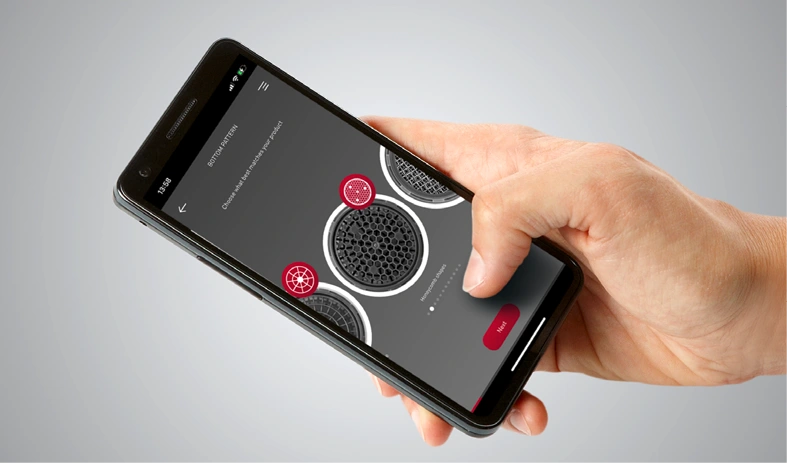
To discover the product options and select by flow rate, size, shape or certification please visit the database section of this site.

Regardless of your application we invite you to request samples and test in the actual working conditions of your device. OEMs (manufacturers) are also welcome to send us a sample of their application device for flow rate testing in our lab in Waterbury and assistance in the selection of a NEOPERL® flow control solution. Contact Fred Fraisse at info@neoperl.com for more details.